Architectural Documentation for Construction
What “Architectural Documentation” Really Means on a Construction Project
Architectural documentation is the full package of drawings and written information used to explain a building clearly enough that different people—client, authorities, contractors, subcontractors, suppliers, and inspectors—can all build the same thing with the same expectations. A construction project is not executed from a pretty floor plan alone. It is executed from a coordinated set of drawings that describe geometry, dimensions, levels, materials, assemblies, interfaces between systems, and the performance intent of the design. Documentation is what turns “design” into “instructions,” and those instructions must be detailed enough to price the work, sequence it, order materials, control quality, and verify compliance.
Why Construction Drawings Are Necessary Even When Everyone Thinks They “Understand” the Building
On real sites, the main reason mistakes happen is not lack of skill, but lack of shared certainty. A contractor can “understand” the layout and still miss the exact wall thickness, the floor-to-floor height, the location of a structural opening, the waterproofing edge, the door swing, the slope direction, the fall of drainage, or the coordination clearances in the ceiling void. Construction drawings create a single source of truth that reduces assumptions. They also create responsibility: when a dimension, level, or detail is written down, it becomes checkable. This is why documentation is essential for controlling cost variations, avoiding rework, managing claims, resolving disputes, and proving what was supposed to be built if something goes wrong later.
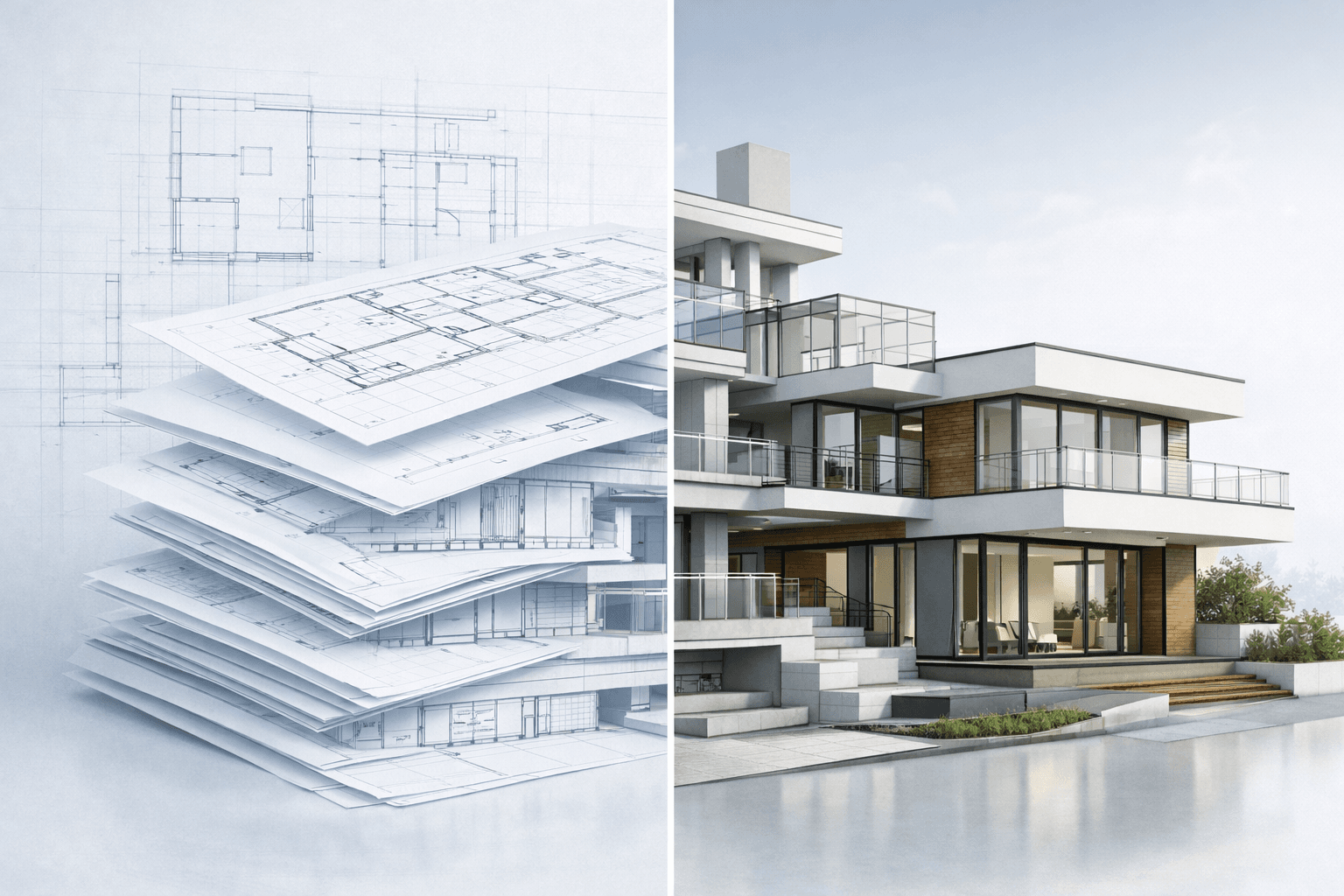
The Core Sets of Drawings Used in Most Building Projects
Most projects are built from a coordinated “construction set” that typically includes architectural drawings, structural drawings, and MEP drawings (mechanical, electrical, plumbing), often alongside civil/site drawings and sometimes specialized packages such as fire protection, façades, kitchen/laundry, medical equipment, ICT/low-current systems, landscape, and interior design. Even when one office produces them all, they are separated because each discipline answers different questions: architecture defines spaces, use, finishes, openings, and buildability; structure defines how loads are carried safely to the ground; MEP defines how the building functions day-to-day—comfort, power, lighting, water supply, drainage, ventilation, safety, and controls.
The construction set exists so each trade has enough information to do their work without guessing, and so all trades can coordinate where their work touches the same physical space.
Architectural Drawings and Their Roles in Construction
The architectural portion typically communicates planning, dimensions, levels, building envelope logic, and the intended appearance of the finished building. It is the package that establishes the “what and where” of the building: floor plans show room arrangement, wall positions, openings, stairs, and sometimes key fixtures; elevations communicate façade composition, window/door patterns, and external heights; sections explain vertical relationships like slab thicknesses, ceiling heights, roof build-up, and foundation step-downs; and details show how things are actually assembled—how a window meets a wall, how waterproofing turns up at a threshold, how parapets are capped, how a handrail is fixed, how a roof edge drains, and how finishes terminate cleanly.
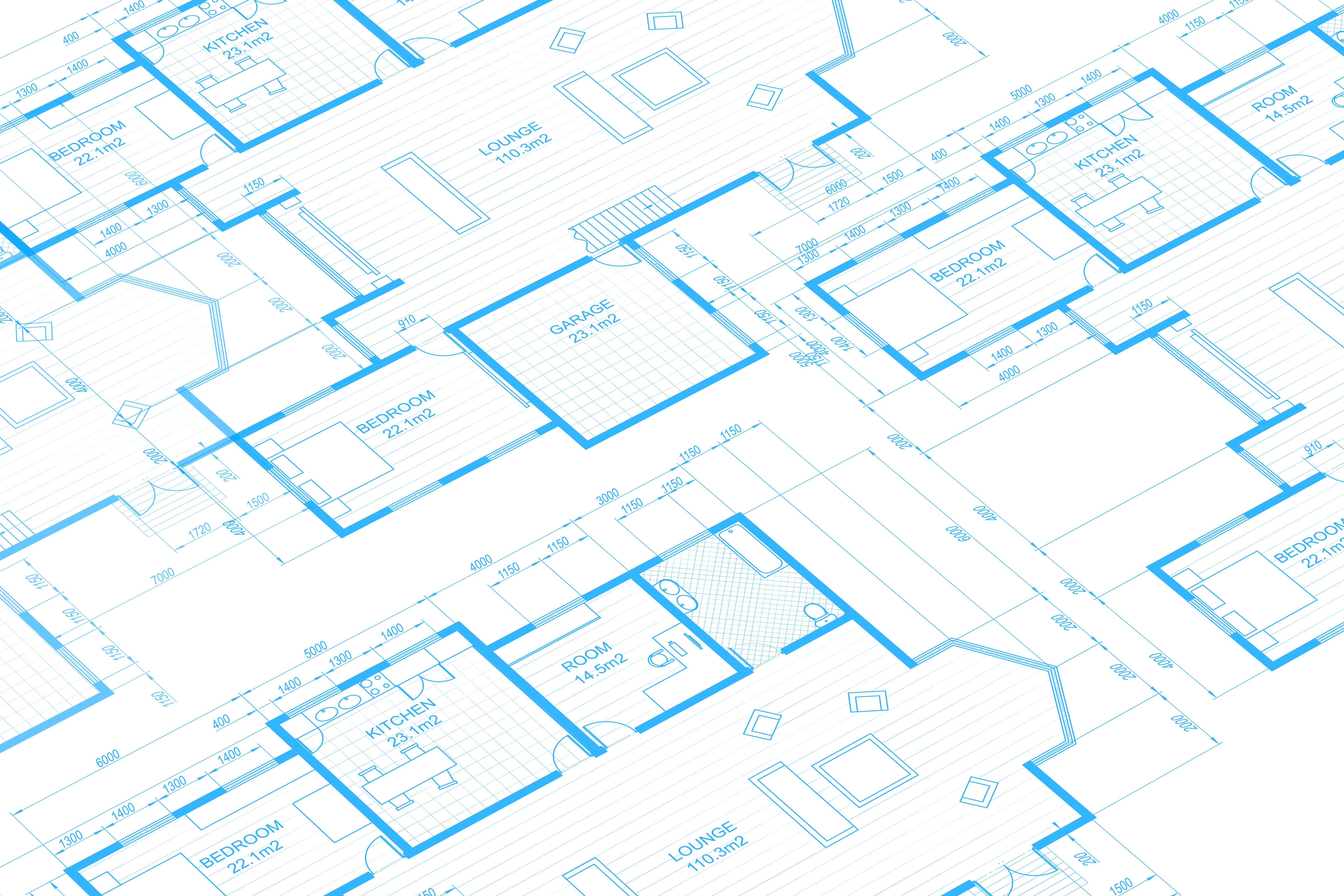
Architectural drawings also carry finish intent: the surfaces people see and touch, including floor finishes, wall finishes, ceiling types, trim, and joinery. When drawings are serious, they do not just show “tiles”; they show where tiles stop, how corners are treated, which wet areas need waterproofing and upturns, and which slopes are required to make drainage work.
Structural Drawings and Their Roles in Construction
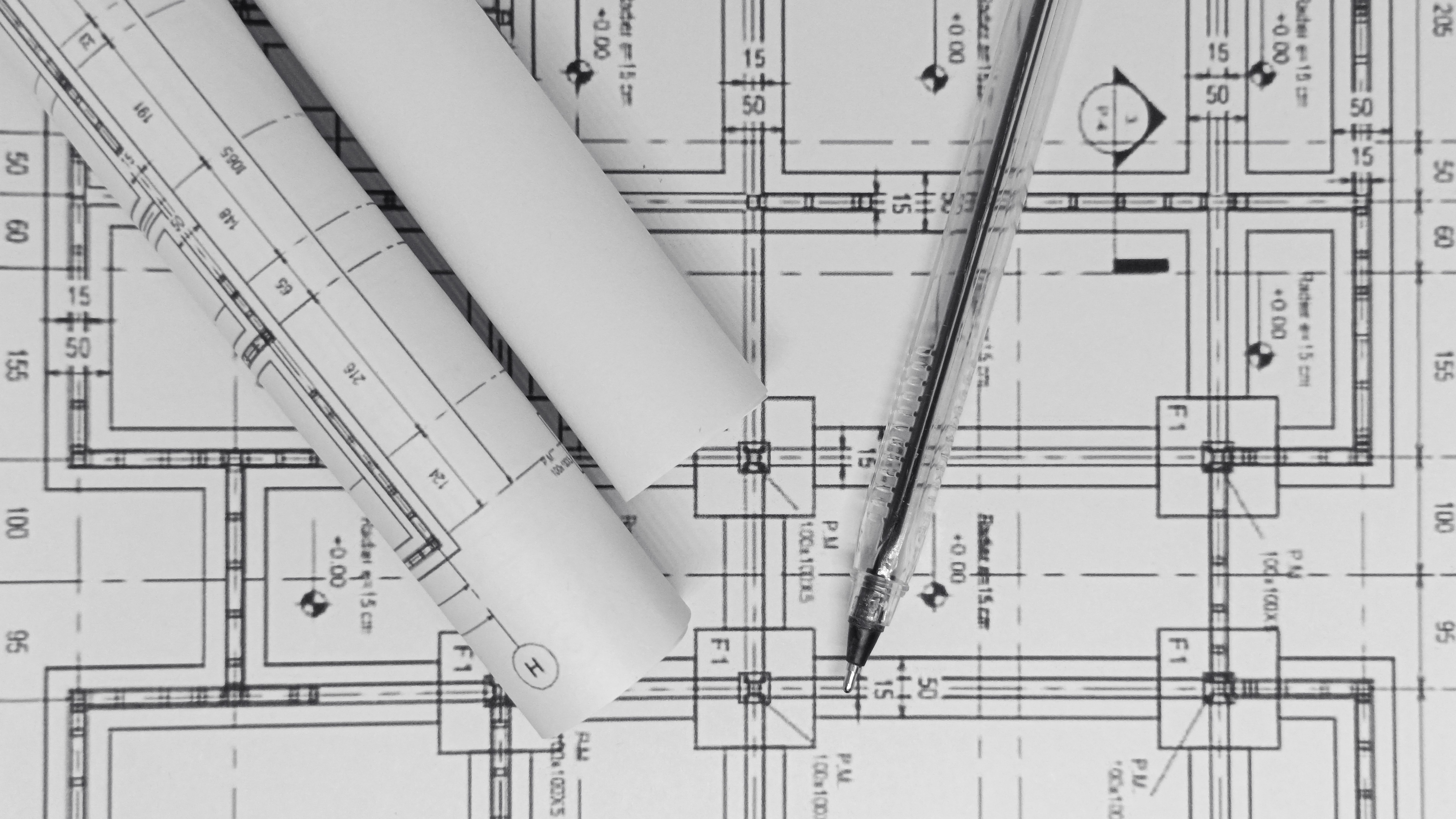
Structural drawings translate the building geometry into a safe load-resisting system. They communicate where columns, beams, walls, slabs, and foundations are located, how thick they are, how they connect, and how reinforcement is placed. On a typical reinforced concrete project, the structural set describes the grid or reference system, the slab spans and thicknesses, beam sizes, column sizes, foundation type, and reinforcement rules such as bar diameters, spacing, lap lengths, anchorage, stirrup spacing, cover requirements, and detailing at critical zones. Their role is not only safety but also predictability: structural drawings provide the information needed to set out formwork accurately, order steel, schedule pours, control deflection and cracking, and coordinate penetrations for services without weakening the structure. A properly documented structure also prevents the common site problem where MEP openings are hacked later, damaging beams or slabs and creating long-term defects.
Mechanical, Electrical, and Plumbing Drawings and Their Roles in Construction
MEP drawings communicate how the building will “live.” Plumbing drawings define cold water supply routing, hot water (where applicable), pipe sizes, fixture connections, venting, gradients for drainage, inspection access points, and connection to septic tanks, soakaways, or municipal lines. Electrical drawings define the service entry, distribution boards, circuiting strategy, cable routes (conduit/trunking), lighting layouts, switching logic, socket outlets, dedicated equipment circuits, earthing/grounding, and sometimes lightning protection. Mechanical drawings vary by building type: in small residential projects they may be basic ventilation and occasional split AC locations, but in commercial buildings they can include ductwork layouts, diffuser/grille locations, fan coil units, chillers, VRF systems, fresh-air requirements, exhaust, equipment schedules, and control zoning.
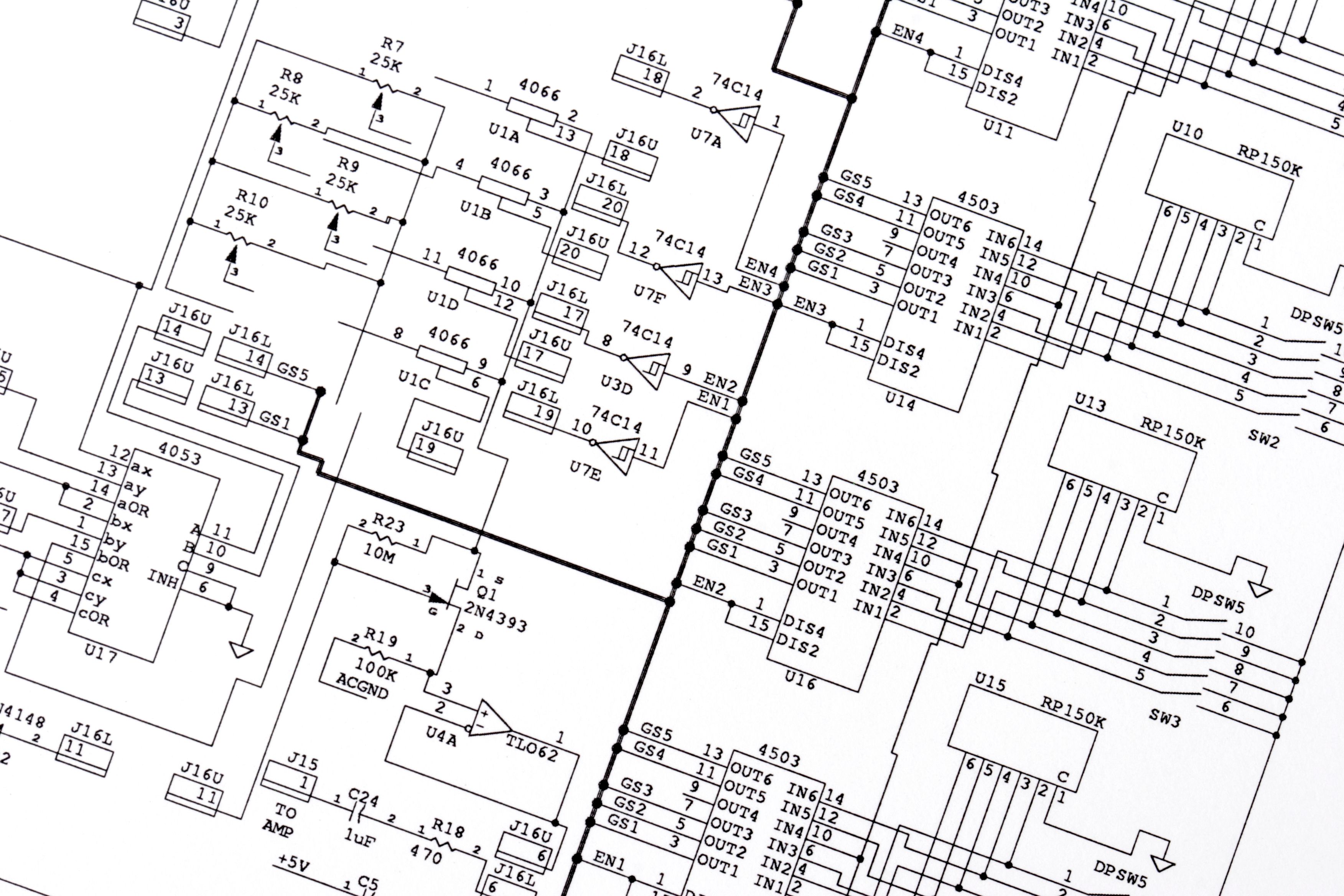
MEP documentation is crucial because these systems compete for space inside ceilings, shafts, walls, and floors; without clear drawings, you get clashes, ceiling drops, noisy pipe runs, poor slopes, awkward access panels, and expensive re-routing after finishes are installed.
Civil and Site Drawings and Their Roles in Construction
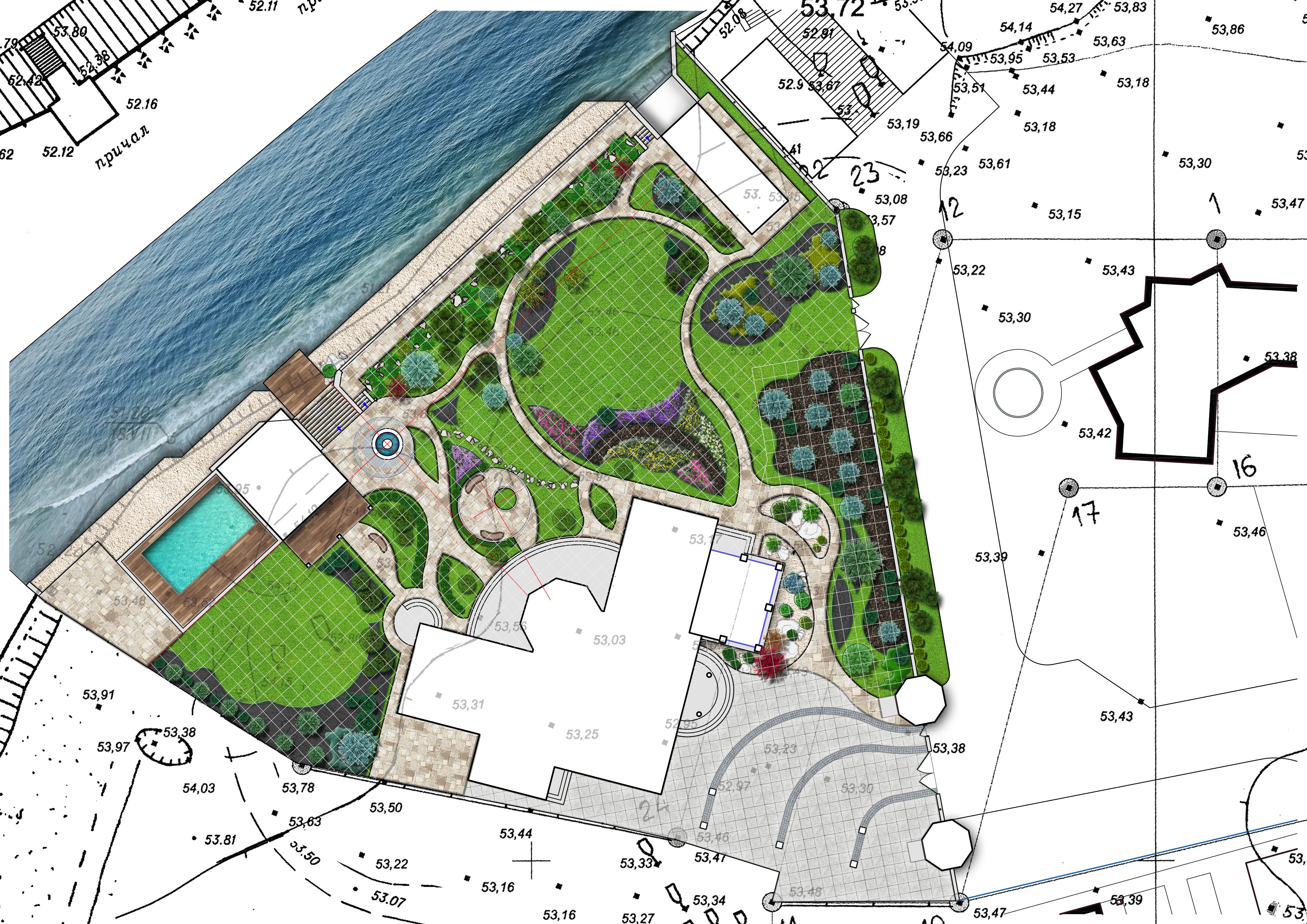
Site works are often the most underestimated part of documentation, especially in West African projects where drainage and ground conditions can dominate performance. Civil/site drawings typically show plot boundaries, setbacks, existing features, proposed levels, earthworks, site drainage, access roads and parking, external water supply routing, septic and soakaway locations, manholes, stormwater management, and sometimes retaining walls and slope stabilization. These drawings are the bridge between the building and the land. They prevent problems like water ponding around foundations, driveway slopes that flood the porch, incorrect finished floor levels relative to the road, or septic systems placed too close to wells, boundaries, or building footings.
How the Drawing Set Is Put in Order Inside a Professional Construction Package
A construction set is not just a pile of pages; it is a system designed for fast reading on site. Pages are usually grouped by discipline and then ordered from general information to specific information. Most sets start with general sheets that explain project data and how to read the package, then move into plans (because plans are the primary setting-out tool), then elevations and sections (to confirm heights and envelope intent), then enlarged plans and details (to build critical zones correctly), and finally schedules and specialist notes that support purchasing and installation. This order matters because the user on site often starts with the floor plan to locate the work, then checks elevations/sections for height confirmation, then goes to a detail for the exact assembly, and finally checks the schedule for the exact door type, window type, or finish selection.
Where Specifications Fit Within Architectural Documentation
Specifications are the written half of architectural documentation, and they carry equal legal and technical weight as the drawings. While drawings explain where things go, how big they are, and how they connect, specifications explain what exactly is acceptable and how quality is measured. They define materials, workmanship standards, tolerances, installation procedures, testing requirements, performance criteria, and acceptance conditions. Without specifications, drawings become open to interpretation, substitutions, and shortcuts, especially when different contractors price the same work differently.
Turning Documentation Knowledge into Real-World Skill
Understanding architectural documentation—drawings, specifications, and project documents—is not just an academic exercise; it is a practical skill that determines whether a project is buildable, coordinated, and controlled from design to completion. Being able to read, organize, interpret, and produce complete construction documentation is what separates casual drafting from professional practice, and site experience from true technical mastery.
This is exactly why the curriculum at D-Tech Center is structured to go far beyond software commands or isolated drawings. Our training programs teach how full construction sets are assembled, how drawings and specifications work together, how documents change with building type and scale, and how they are used on real sites for costing, coordination, supervision, and decision-making.
For anyone serious about architecture, construction, or building technology, mastering documentation through a structured, practice-oriented curriculum is not optional—it is foundational.