Residential Architecture: Its evolution throughout history
Housing as a Mirror of Human Life
Have you ever wondered why some houses turn inward around a courtyard, while others open wide toward the street or the landscape? Why do some residential buildings feel symmetrical and formal, others richly decorated, and others extremely simple and minimal? These differences are not random; they reflect the evolution of residential architecture over time, shaped by history, climate, culture, and changing ways of living.
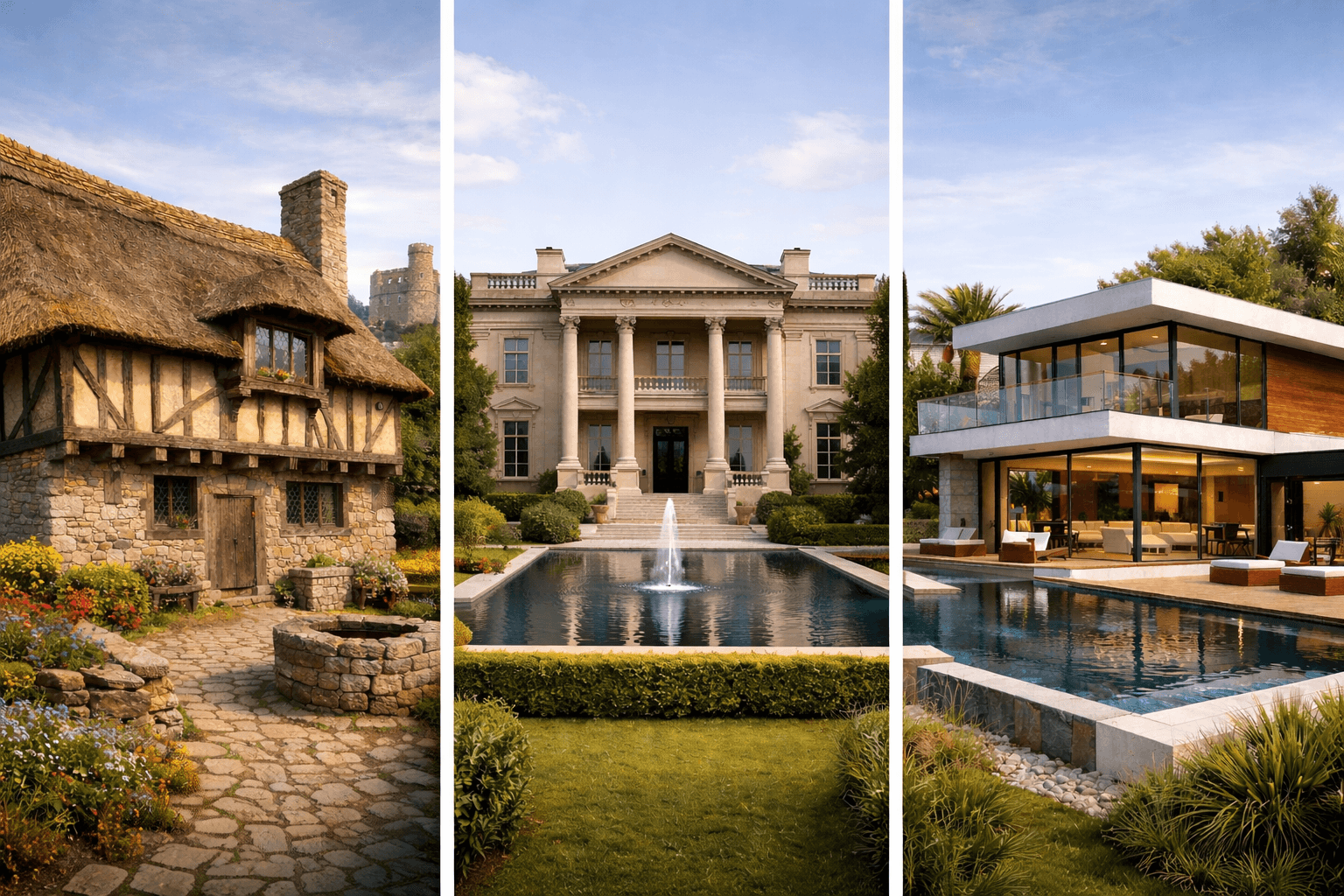
Residential architecture is one of the clearest ways to understand how people have lived, organized family life, protected privacy, and adapted to their environment. Every house carries traces of its time, revealing how materials, construction knowledge, and social values influenced domestic space.
From Vernacular Traditions to Early Urban Housing
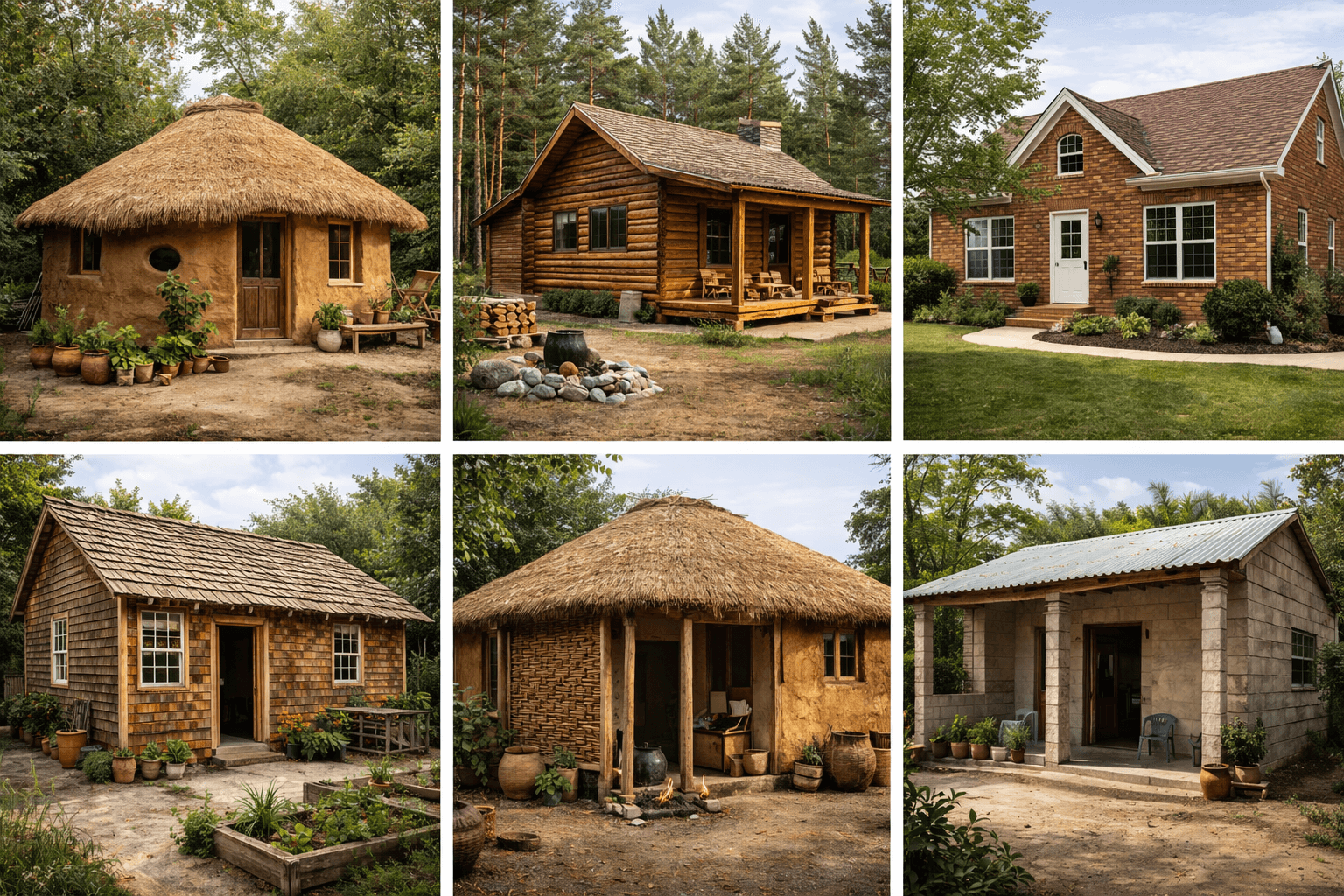
The earliest homes emerged from vernacular traditions, using local materials and climate knowledge rather than formal design theory. Earthen walls, stone construction, timber frames, thatch roofing, and compound layouts appeared across regions because they responded efficiently to local conditions. As settlements grew into cities, housing became more organized, introducing courtyard-based planning, inward-facing rooms, and clearer separation between public street life and private family space, especially in ancient Mesopotamian, Greek, and Roman residential forms.
Medieval Forms and the Rise of Classical Order
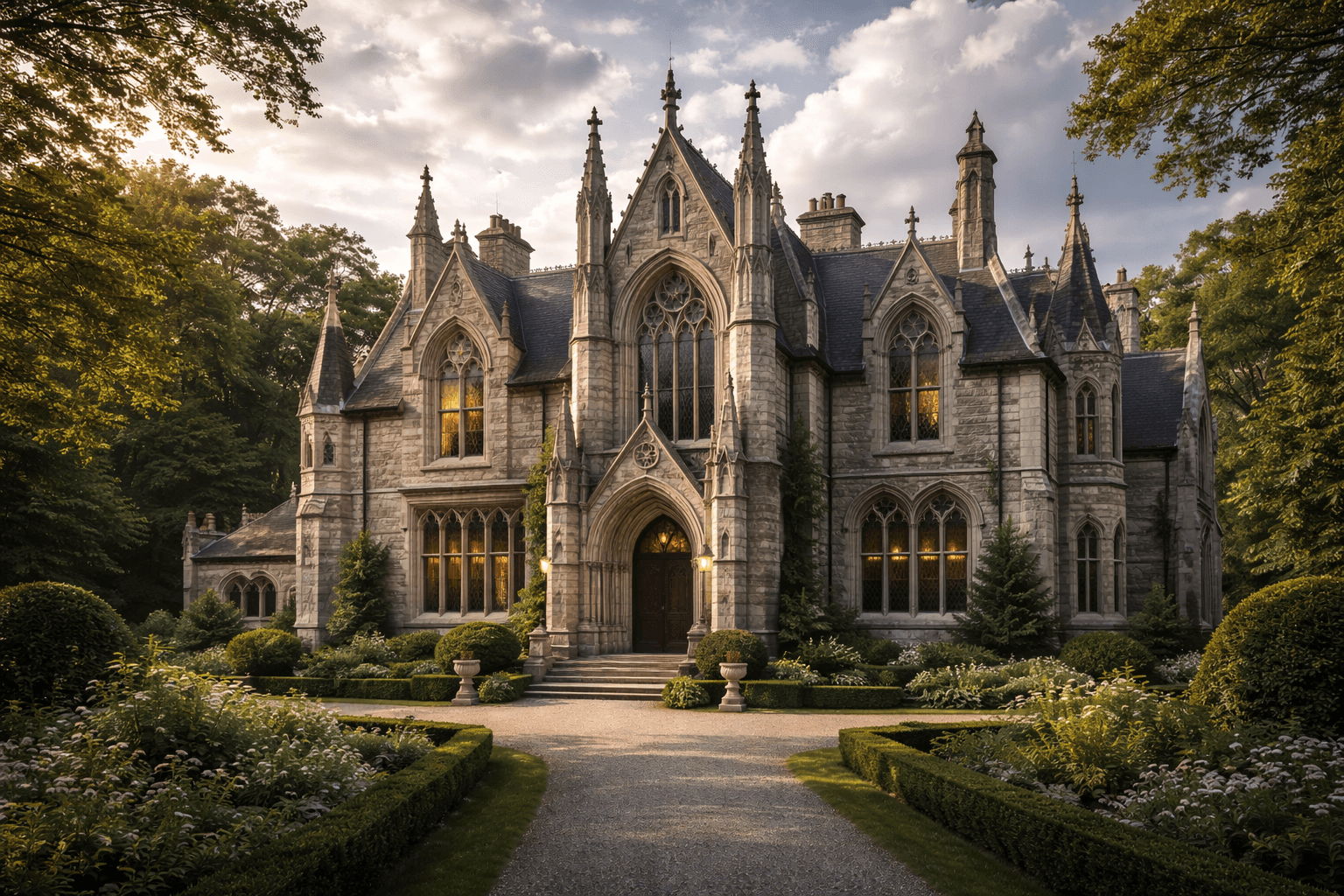
During the Middle Ages, residential architecture often became compact and defensive, shaped by narrow streets, security concerns, and craft-based construction. Thick walls, small openings, and mixed-use townhouses with workshops below and shared living halls above were common. Gothic influence added vertical emphasis, pointed openings, and steep roofs to elite housing, before the Renaissance introduced symmetry, proportion, and classical order, gradually replacing medieval heaviness with more deliberate architectural composition.
Industrial Change, Modernism, and Contemporary Diversity
The industrial age transformed housing through mass production, rapid urbanization, and new construction systems. Victorian-era residential architecture produced richly detailed homes alongside dense apartment blocks, while later movements such as Arts & Crafts and Art Nouveau reacted by emphasizing craftsmanship and organic form. The 20th century then marked a decisive break with tradition through Modernism, promoting clean geometry, open plans, and functional clarity, followed by mid-century housing that strengthened indoor–outdoor living and spatial flexibility.

Learning Residential History as a Design Skill
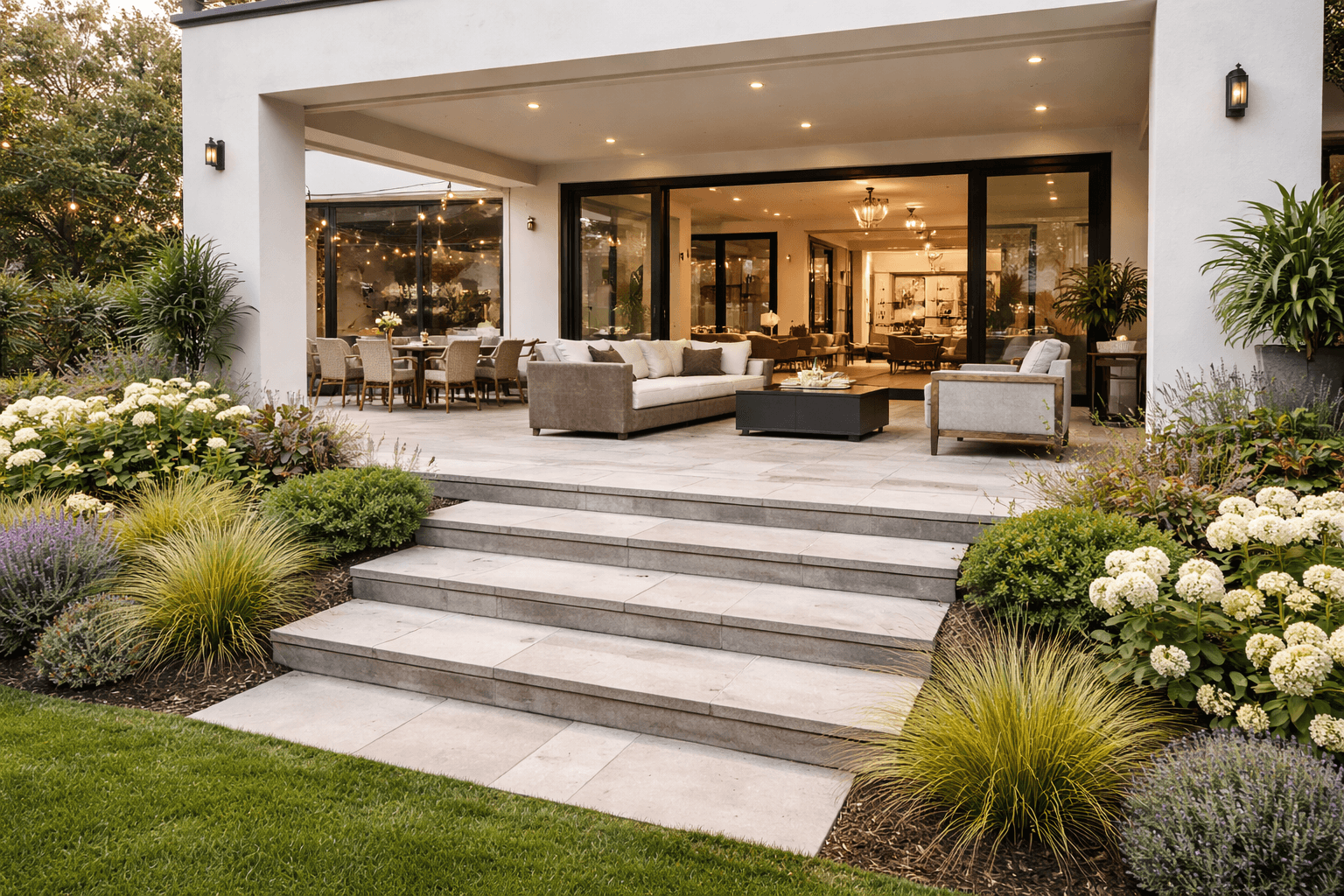
Today, residential architecture continues to evolve through diverse approaches such as minimalism, tropical and regional modernism, biophilic and green design, smart homes, and flexible living environments. Understanding this long historical progression is essential for anyone involved in residential design or drafting.
At D-Tech Center, Residential architecture: Its evolution throughout history is taught as a 10-part video lesson series within the Residential Drawing & Design course, where each architectural period and residential style discussed here is explored in depth. By enrolling, learners gain access to this complete series and develop the ability to recognize residential styles clearly and apply historical understanding to contemporary residential drawing and design projects. Click on the following link to watch the first part of the series. - https://youtu.be/3cSQ3YoQ6aM