Why a Change in One Building System Affects All Others
Buildings are “one machine” made of many parts
A building works like one complete machine where many parts share the same limited space. The structure is the building’s skeleton — it decides where walls, floors, and openings can exist. Plumbing is the network that brings in water and takes waste out, and it needs space to slope and flow properly. Electrical systems carry power and lighting safely, which means they must avoid water and respect safety clearances. Ventilation and air-conditioning move air through the building to keep spaces comfortable, and they need clear paths to do so. Finishes and architectural elements control what we see, touch, and can access for maintenance. Because all these parts run through the same walls, ceilings, and floors, changing one part always affects the space available for the others — even when the change looks small on paper.
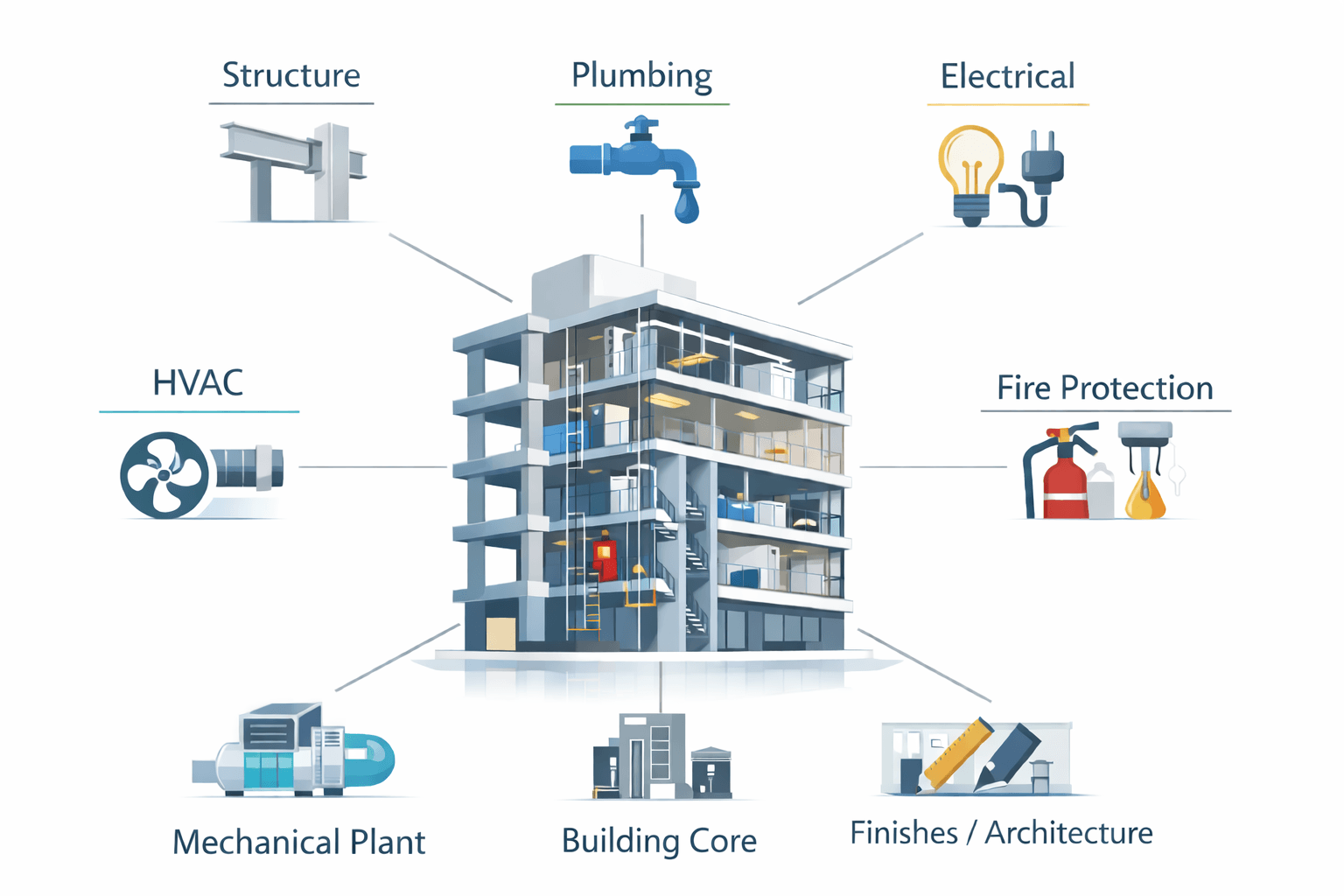
The real reason changes spread: shared geometry, shared space, shared constraints
Changes ripple across systems for three main reasons. First is shared geometry: a wall moves, a ceiling drops, a slab thickens, a beam deepens—suddenly every system that depended on that geometry must update. Second is shared space: ducts, pipes, cable trays, and structural members all compete for the same ceiling voids and shafts, and one system “stealing” space forces another to reroute. Third is shared constraints: access, maintenance, fire ratings, acoustic performance, waterproofing, and code clearances are not owned by one system. If plumbing creates a wet zone, electrical rules change there. If HVAC requires a fire damper through a wall, the wall rating and architectural detail must change. This is why professionals treat design as coordination, not as isolated disciplines.
Structural changes: why they are often the most expensive ripple-makers
Structure is the skeleton. When it changes, it can trigger multiple “secondary redesigns” because structure controls penetrations, levels, and available service zones. For example:
- Beam depth increases (or a drop beam is introduced): you may lose the clear height needed for ducts, resulting in ceiling drops, soffits, or duct rerouting. This can then force lighting layout changes and may reduce room proportions in a way the architect must resolve.
- Column shifts: risers and vertical shafts may no longer align. Plumbing stacks and electrical risers depend heavily on vertical alignment; if they shift, you may need new sleeves, new wall chases, and sometimes a redesign of wet rooms.
- Slab thickness or reinforcement zones change: penetrations become restricted. A single “no-core zone” or heavy reinforcement region can block pipe sleeves and force rerouting below the slab, which can trigger ceiling redesign.
- Openings in structural walls: changing an opening size affects lintels, tie beams, or ring beams, and can also disrupt the routes of electrical conduits and plumbing lines that were planned to pass around that opening.
The mistake people make is assuming structure is “only concrete and rebar.” In practice, structure is also the map of where services are allowed to exist.
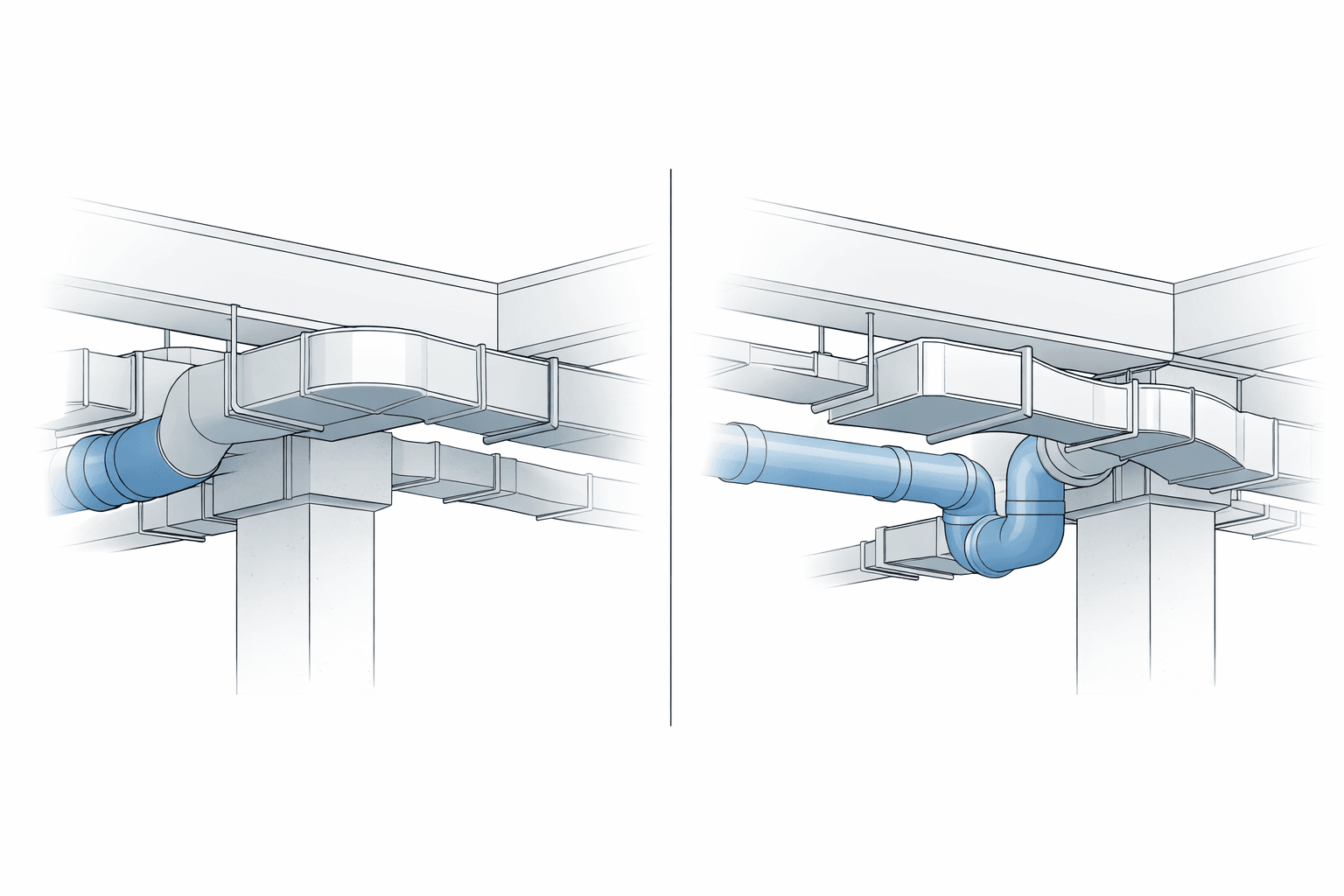
Plumbing changes: why “just moving a bathroom” is never just plumbing
Plumbing is one of the strongest “chain reaction” systems because it depends on gravity, slope, venting, and vertical stacks. Move fixtures and you change more than pipe routes.
- Changing slopes and invert levels (for waste lines). A small horizontal shift can force a deeper drop, which may require a ceiling bulkhead below—or a raised floor above.
- Wet zones: repositioning showers, floor drains, or basins changes waterproofing extents and detailing, which affects finishes, thresholds, and door clearances. That also changes where electrical outlets and lighting can be safely placed.
- Access and maintenance: adding cleanouts, access panels, inspection points, and valve locations can conflict with cabinetry, wall finishes, and lighting symmetry.
- Penetrations: plumbing requires sleeves through slabs and walls. If the route changes, the structural team must re-approve penetration locations and sizes, and fire stopping requirements may change.
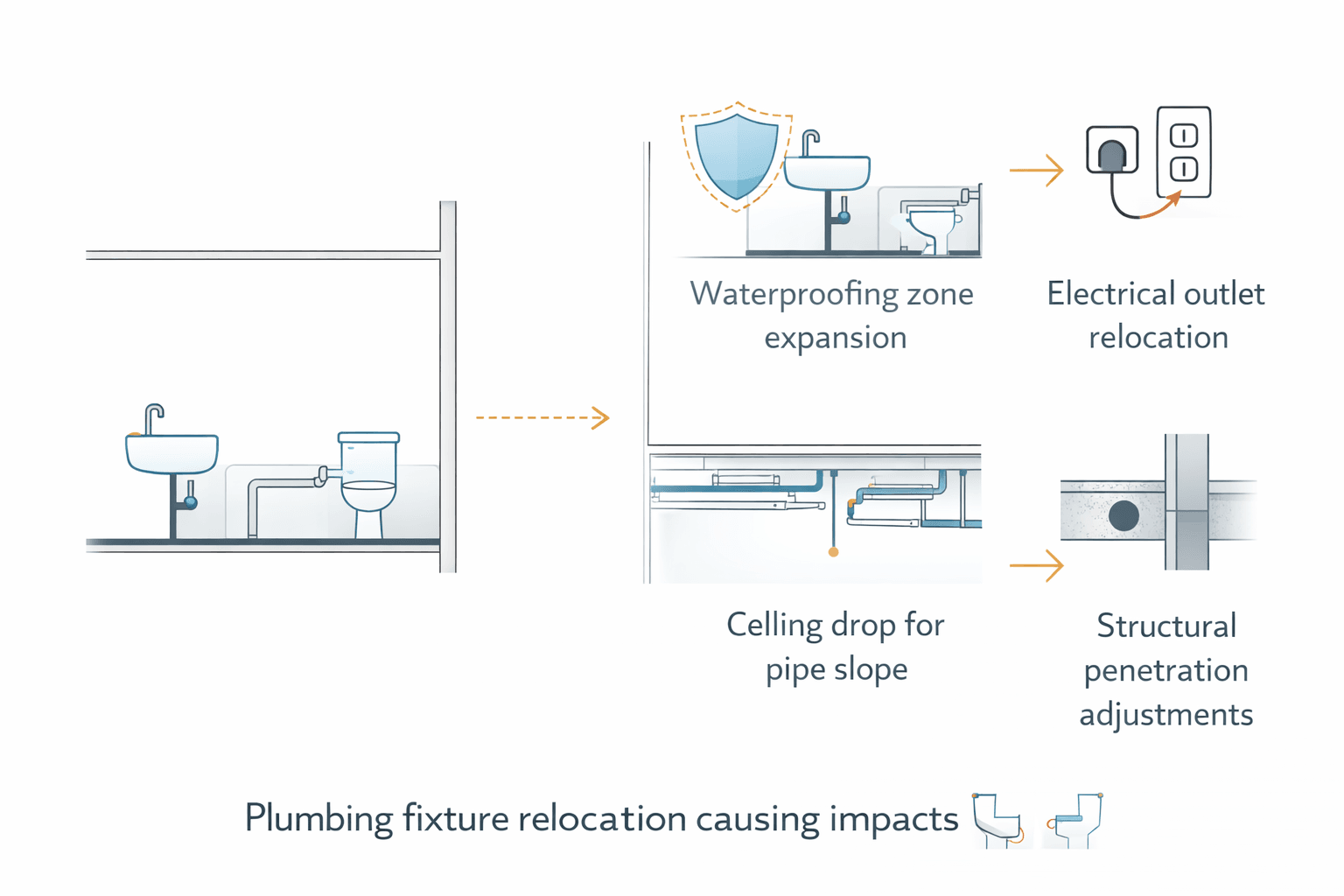
Plumbing ripple diagram
A common real-life issue is when a contractor shifts a waste line to “make it work,” then later the ceiling plan, lighting, and duct routing become impossible without rework. A plumbing change should always trigger a review of structure penetrations, electrical safety zoning, ceiling coordination, and finish detailing.
Electrical changes: the invisible system that still needs space, rules, and logic
Electrical often looks “easy to reroute” because cables are smaller than pipes and ducts. But electrical changes can become problematic because electrical is governed by clearances, zoning, and coordination with ceilings.
- Lighting layout changes usually force ceiling changes. If HVAC requires a new diffuser location, it can disrupt lighting symmetry and force a redesign of the reflected ceiling plan (RCP).
- Panelboard relocation affects cable runs, voltage drop considerations (especially on long runs), accessibility clearances, and sometimes room function (you can’t always place panels in certain spaces).
- Cable trays and conduits compete with ducts and plumbing at high congestion zones—especially corridors and service cores. A small HVAC change can force trays to shift, which can then affect downlights, access panels, and ceiling framing.
- Wet-area restrictions: plumbing modifications can reclassify zones, forcing electrical outlets, switches, and even lighting types (IP ratings) to change.
Electrical should be coordinated not only with routes, but also with maintenance access, ceiling framing, and the architectural logic of spaces.
HVAC changes: why ducts create the biggest coordination battles
Heating, Ventilation, and Air Conditioning (HVAC) is the system most likely to “take over” space because ducts are large and need gentle transitions. A change in HVAC is rarely local; it often affects an entire run.
- Increasing airflow might require larger ducts, which can reduce ceiling height or require rerouting that triggers lighting redesign and architectural compromises.
- Changing diffuser locations affects comfort distribution and ceiling composition; it can force changes to lighting, sprinkler heads, and ceiling panels.
- HVAC routes often require crossing structural beams. If beam depths change, HVAC offsets increase, which can cause higher pressure losses and may require fan changes—this becomes an energy, equipment, and cost issue.
- Return air strategies (plenum vs ducted return) can affect fire/smoke control and ceiling construction methods.
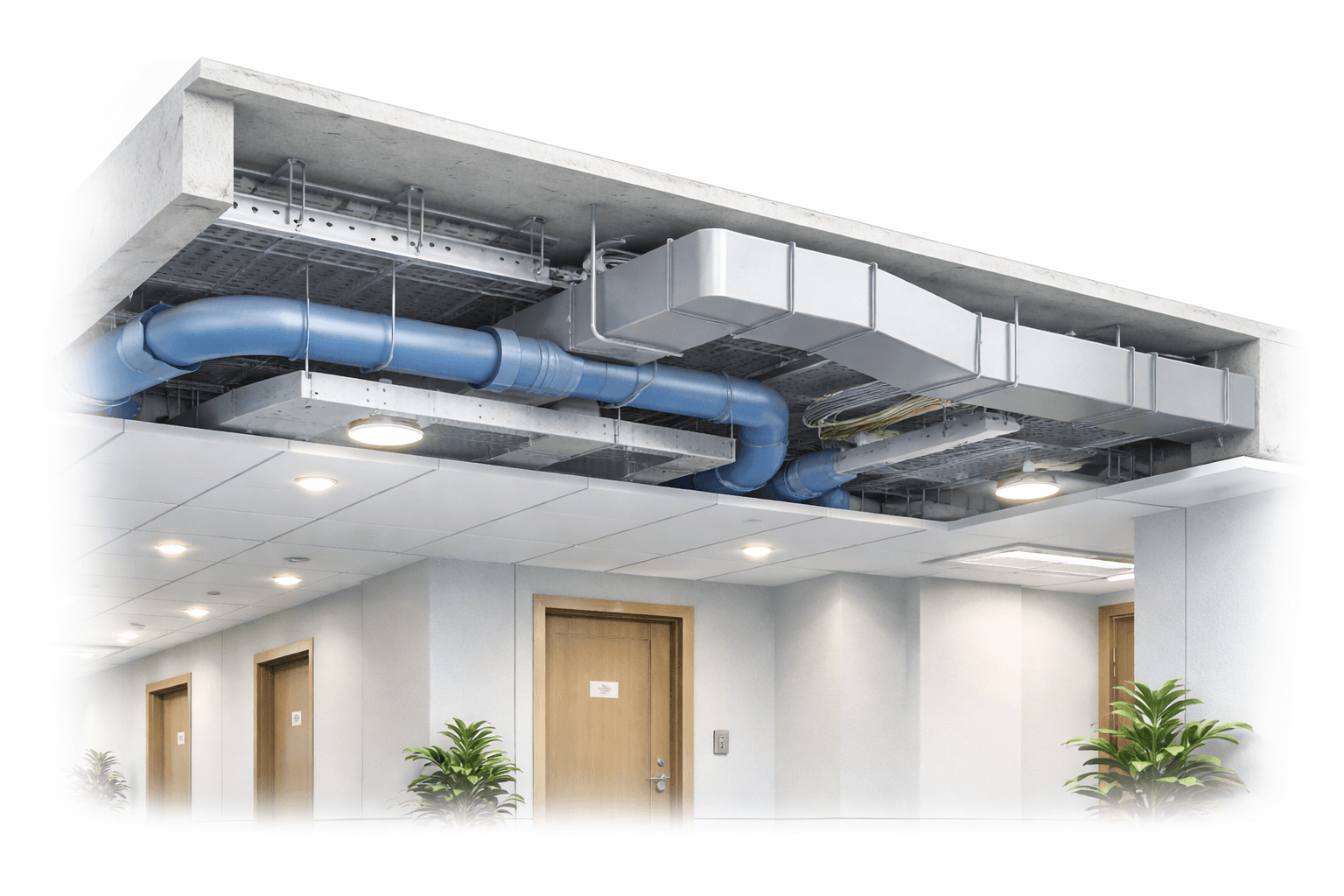
Section perspective showing coordinated ceiling void
The lesson: HVAC changes aren’t just “mechanical.” They are architectural and structural changes in disguise because they directly shape ceiling zones and spatial experience.
Fire protection and life safety: the “system above all systems”
Fire protection is not simply sprinklers and alarms. It’s also fire-rated walls, dampers, fire stopping, smoke control strategies, and exit requirements. When other systems change, fire safety must be rechecked. For instance:
- If a duct passes through a rated wall, you may need a fire damper, which affects duct sizing, access panels, and sometimes architectural finishes.
If penetrations change, the fire stopping detail changes too—this is often missed until inspection. - Ceiling changes can affect sprinkler coverage and head positioning.
- Room use changes can alter hazard classification and the design basis for suppression.
Fire safety is often where projects fail inspections because changes were made without re-coordinating the life safety logic.
Change management: the professional method that prevents rework
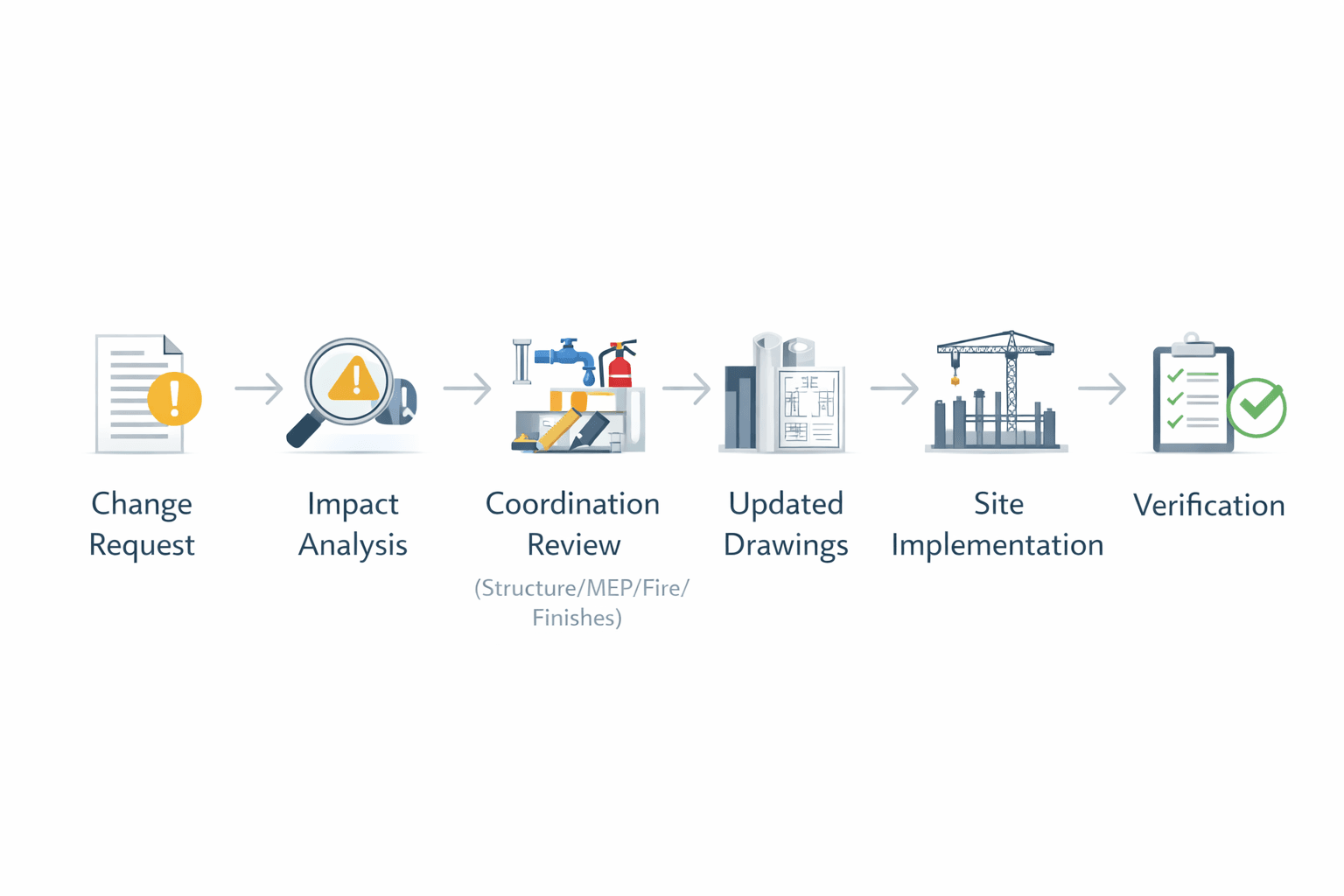
Change is not a problem. Unmanaged change is the problem. A professional workflow treats each change as an event that must be assessed across systems. A strong method looks like this:
- Define the change clearly (what exactly is moved, resized, added, or removed).
- Identify affected zones (which rooms, corridors, shafts, ceilings, slabs).
- Run an “impact checklist”: structure, penetrations, ceiling zones, electrical zoning, waterproofing, access/maintenance, fire rating, and finishes.
- Update drawings consistently (plans, sections, details, schedules).
- Communicate the change to all parties before work proceeds.
This is why experienced project managers and contractors always ask: “What will this change break?” That question saves money.
Why System Coordination Must Be Learned, Not Assumed
Understanding that a change in one building system affects all others is not instinctive — it is a skill that must be learned and practiced. Many coordination problems on construction sites come from professionals who understand individual systems, but not how those systems interact when changes occur.
This is where structured training becomes essential. Learning how to read drawings across disciplines, anticipate system conflicts, analyze the impact of modifications, and harmonize solutions before construction begins is what transforms a drafter, designer, or contractor into a coordinated construction professional. These skills reduce site improvisation, protect budgets, and significantly improve project outcomes.

At D-Tech Center, our training programs are designed precisely around this reality of construction. Through construction technology, architectural, structural, electrical, plumbing, and coordination-focused courses, learners are taught to think in systems — not in isolation. The goal is not only to know how to draw, but to understand what a change causes, where conflicts arise, and how to resolve them before they reach the site.
In modern construction, coordination is no longer optional. Professionals who master it lead projects with clarity and control. Those who do not are forced to react to problems after they appear. Learning how building systems work together — and how to manage change across them — is one of the most valuable skills in today’s construction industry.