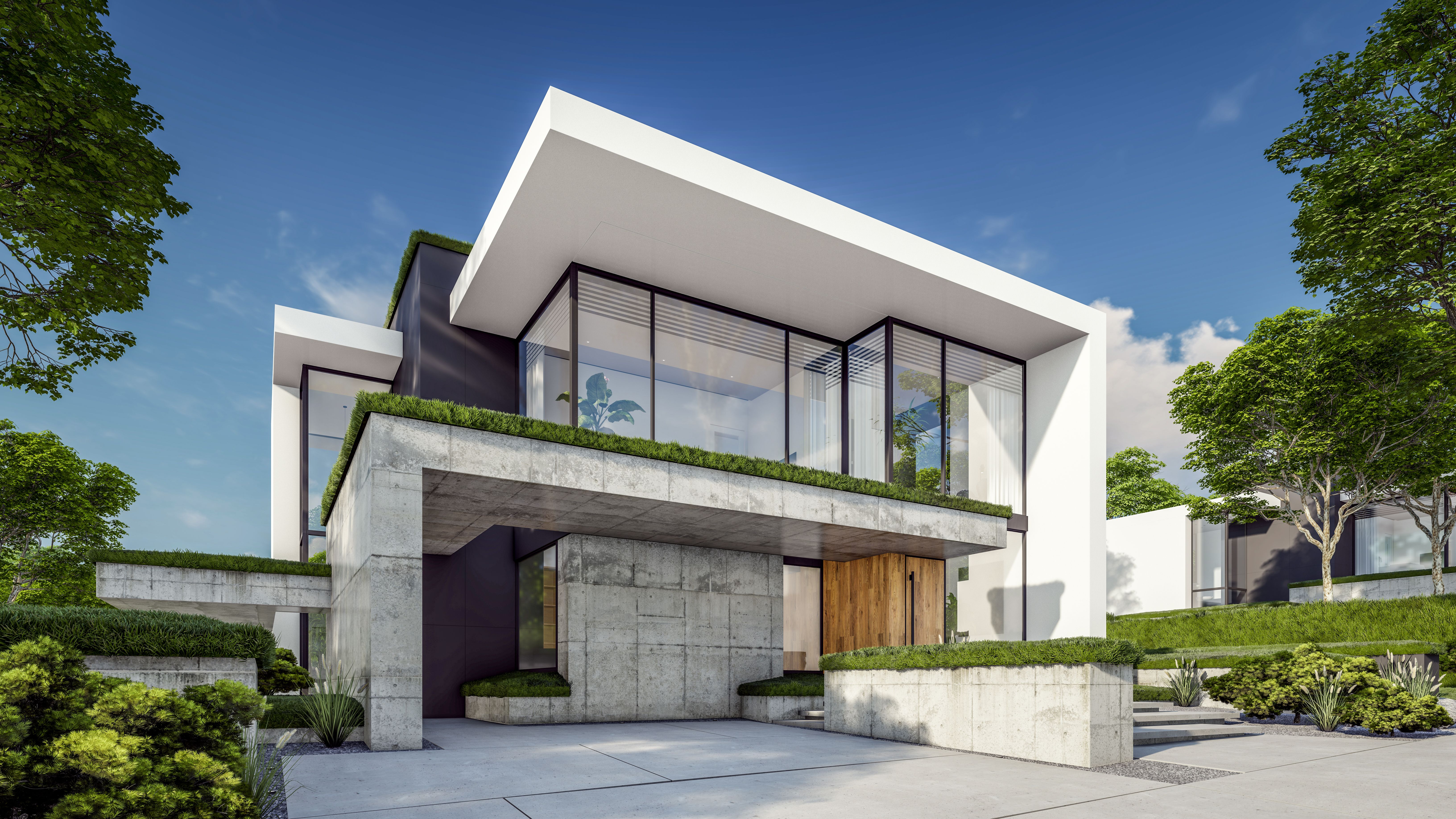
Certificate in Residential Drawing & Design

Residential Drawing & Design

Learn how to create complete, construction-ready residential drawing sets—the same type of drawings used to build houses on real projects. You will develop the drafting skill, drawing logic, and documentation discipline required to communicate design clearly to builders and clients.

Format: 100% Online • Self-Paced

Duration: 2–3 months (depending on your pace)

Tuition: $250 USD

Demonstration Software: Autodesk Revit

Credential: Certificate awarded upon completion
3d rendering of modern house

1/10

Modern cubic villa during the day

1/10

Modern house under blue sky

1/10

3d rendering of modern cozy house in the garden

1/10

Modern white house, Minimal architecture with lawn grass and concrete entrance, 3d rendering of luxury property building

1/10

Modern luxury white Villa Concept with wooden panels.

1/10

3d rendering of flat roof house with concrete facade

1/10

Modern cubic villa during the day

1/10

New white luxury houses in a row

1/10

Brand new apartment building on a sunny day in Phuket Thailand. Modern residential architecture. Nobody, street photo

1/10

Course Overview

Residential drawing is more than making lines on a screen. It is the professional skill of turning an idea into drawings that can be interpreted and built correctly. In this course, you learn the language of residential construction drawings—how plans, elevations, sections, and site plans are drafted, organized, and presented as a complete drawing set.

You will work through a structured, step-by-step syllabus that builds your competence from the fundamentals of architectural drafting to full documentation. By the end, you should be able to produce a clear residential drawing package that looks professional, reads correctly, and supports real construction decisions.

Construction plan. Scheme drawing rolled up in a roll. Home renovation planning.

Who This Course Is For

This course is designed for anyone who wants practical, real-world residential drawing skills, including:

Beginners who want to start architectural drafting properly, aspiring designers who want to learn how houses are documented for construction, students in architecture, building technology, or civil engineering who need solid documentation skills, builders and contractors who want to read, understand, and produce residential drawings with confidence, and interior designers who want to understand architectural drawings and coordinate work properly.

You do not need prior drafting experience. The course starts from the fundamentals and builds up step-by-step.

Businessman in the Street.

Learning Outcomes

By the end of this certificate course, you will be able to produce the key drawings required for a residential project and present them as a clean documentation set:

  • Floor Plans: draft readable layouts with walls, doors, windows, rooms, stairs, fixtures, and correct dimensioning principles
  • Roof Plans: represent roof forms and slope logic clearly and professionally
  • Elevations: draft exterior views that communicate façade composition and opening positions
  • Sections: create sections that explain vertical organization—levels, stairs, roof relationship, and key heights
  • Site Plans: represent the plot, building position, setbacks, access/driveway logic, and basic site features
  • 3D Modeling and Rendering: generate simple 3D views and clean renders to support presentations and client communication
  • Documentation Set: organize drawings into a coherent sheet layout that looks professional and can be used for real building work
Upscale modern mansion with pool

Course Syllabus (10 Modules)

Module 1 — Introduction to Architectural Drafting & Design
This module introduces the fundamentals of architectural drafting and the role of drawings in the building process. Students learn why architectural drawings exist, how they communicate design intent, and how they are used on construction sites. The module also clarifies the professional roles involved in a residential project and how design information progresses from concept to construction documentation.

 
Module 2 — Introduction to Residential Architecture
Students explore the basic principles of residential architecture, including common housing types, spatial organization, circulation, and functional zoning. The module focuses on understanding how people use residential spaces and how design decisions respond to comfort, privacy, and construction practicality.

 
Module 3 — Floor Plan Drawing
This module focuses on residential floor plans as the foundation of architectural documentation. Students learn drafting conventions for walls, doors, windows, stairs, fixtures, and room layouts. Emphasis is placed on clarity, scale, proportion, and correct dimensioning so plans can be accurately interpreted and built.

 
Module 4 — Roof Plan Drawing
Students learn how roof forms are represented in architectural drawings. The module covers roof types, slopes, ridges, edges, and how roof information is clearly communicated for construction. Students also understand the relationship between roof layout, walls, and overall building form.

 
Module 5 — Elevation Drawing
This module teaches the drafting of exterior elevations. Students learn how to represent façade composition, opening placement, proportions, and material expression using professional elevation conventions. The goal is to produce elevations that clearly communicate the external appearance of a residential building.

 
Module 6 — Section Drawing
Students learn how to create building sections that reveal the internal vertical organization of a house. This includes floor levels, stair relationships, roof structure logic, and key heights. The module strengthens the student’s ability to think spatially and communicate construction logic clearly.

 
Module 7 — Site Plan Drawing
This module introduces site planning and site drawing conventions. Students learn how to represent plot boundaries, building positioning, setbacks, access routes, driveways, and basic site features. The site plan is taught as a critical drawing for understanding orientation and placement before construction begins.

 
Module 8 — 3D Modeling & Rendering
Students develop basic 3D modeling skills by translating their 2D drawings into a simple digital model. The module introduces camera views, materials, lighting, and rendering fundamentals to produce clean, professional visual representations that support design communication and presentation.

 
Module 9 — Documentation and Sheet Layout
This module focuses on organizing drawings into a complete and professional documentation set. Students learn sheet layout principles, drawing coordination, consistency across drawings, and clean export methods. Emphasis is placed on producing drawings that are readable, structured, and construction-ready.


Module 10 — Residential Architecture Studio Project (Capstone)
This final module serves as the studio component of the course. Students are assigned a residential design brief similar to those used in architectural schools and professional practice. The brief defines basic site conditions, client requirements, and functional needs. Students develop a complete residential proposal and apply all skills learned throughout the course.

Close up shot on modern cubic house

Learning Format and Study Experience

This course is fully online, self-paced and available in both English and French. You learn by following structured lessons, practicing what you learn, and producing drawings progressively. Each module builds on the previous one so your skills develop in a logical order.

You finish the course with a complete residential documentation output that demonstrates your drafting ability and your understanding of how residential drawings are assembled as a professional set.

To support learning and encourage interaction, a live online meeting is scheduled every week using Zoom or Google Meet. During these sessions, students can interact directly with the lead instructor, ask questions, seek clarification on topics they did not fully understand during the week, and discuss challenges encountered while working through the lessons.

In addition to weekly meetings, webinars are organized from time to time to address specific topics related to architectural drawing and design. These sessions may focus on professional practices, common drafting challenges, documentation standards, or broader architectural themes. Students are encouraged to participate actively.

Beyond the course lessons, D-Tech Center publishes educational articles on a weekly basis covering topics in architectural drawing, design, and construction. Students are encouraged to read these articles from our website as part of their broader learning experience. The center also shares weekly educational content on its social media platforms, providing short insights, tips, and professional knowledge that complement the course material.

Together, these learning supports create an environment that combines self-paced study with guidance, interaction, and continuous exposure to architectural knowledge.

Young African entrepreneur with headphones using laptop while attending video call at home

Tuition, Registration, and Payment

Tuition: $250 USD

Registration: Students begin by paying a $15 registration fee. Registration grants initial access to course materials up to module 5. Full tuition payment is required to continue beyond that level.

Payment methods include:

  • Visa / MasterCard
  • PayPal
  • International debit cards
  • Mobile Money (where available)
  • Bank transfers (upon request)

Refund policy: Tuition fees are non-refundable.

African American woman businesswoman using mobile phone smartphone bank card investment paying online girl finance debit loan shopping business ecommerce technology internet credit female money city

Admission and Prerequisites

This course is open to all learners. There is no entrance examination or academic qualification required to enroll in the Residential Drawing & Design course. The program is designed as an entry-level foundation course, making it suitable for beginners as well as for learners transitioning into architectural drafting and design.

Prerequisites
There are no academic or technical prerequisites for this course. Students are not expected to have prior experience in architectural drafting or design. However, to participate effectively, students should meet the following basic requirements:

  • Basic computer literacy
  • A personal computer that meets the recommended system requirements
  • A stable internet connection
  • Required drafting software installed and functional before starting the course

This course is intended to be the starting point for students entering the architectural drawing and design pathway at D-Tech Center. Other architectural courses are designed to build on the skills and knowledge introduced in this course. This course is a prerequisite for any other drafting course at D-Tech Center.

African American business man architect designer working design project measure ruler draft on desk board blueprint architecture plan in night evening office ethnic businessman male guy online laptop

Software Used and Recommended System Requirements

D-Tech Center maintains a software-neutral approach to architectural education. While this course uses Autodesk Revit for demonstrations and step-by-step instruction, the principles taught in the course are not limited to a single software platform.

At D-Tech Center, we believe that architectural drawing and design can be performed using any capable architectural software. What ultimately defines the quality of drawings is not the software itself, but the knowledge, understanding, and technical ability of the designer or drafter using the tool. The course therefore focuses on drafting logic, drawing standards, and documentation principles that can be applied across different professional software environments.

Students are required to have the required software (Autodesk Revit) installed and fully functional on their personal computer before starting the course. D-Tech Center does not install software, does not provide software licenses, and does not manage software activation on behalf of students. Each student is responsible for obtaining, installing, and maintaining their own software access in accordance with the software provider’s licensing terms.

To ensure a smooth learning experience, students should use a computer that meets the recommended minimum specifications below:

  • Processor: Intel Core i7 (or AMD Ryzen 7 equivalent)
  • RAM: 16 GB (32 GB recommended for larger projects)
  • Graphics: 4 GB dedicated GPU (NVIDIA or AMD)
  • Storage: 1 TB SSD
  • Internet: stable connection suitable for online learning

Students who do not have the required software properly installed and functional may experience difficulties following lessons and completing course exercises.

Architecture project blueprint background with 3D buildings model and computer

Certification and Academic Progression

Upon successful completion of this course, students are awarded a Certificate in Residential Drawing & Design.

This certificate is not just a standalone qualification. It is the foundation course of the architectural training pathway at D-Tech Center. It provides the core drafting knowledge, drawing logic, and documentation skills that all other architectural courses build upon.

Residential drawing is where students first learn how architectural drawings work: how plans are organized, how buildings are represented in 2D and 3D, and how drawings communicate design decisions clearly for construction. Because of this, the Residential Drawing & Design course is a required starting point for the architectural pathway.

Before taking advanced architectural courses—such as Structural Plans, Electrical Plans, Plumbing Plans, HVAC Plans, Interior Design & Drawing, or Commercial Drawing & Design—students are expected to have completed this residential course. The skills developed here ensure that students can follow advanced lessons without confusion and can understand how different drawing disciplines relate to one another.

For students following the full architectural pathway, this certificate serves as the first step toward the Diploma in Architectural Drawing & Design. It establishes the drafting foundation needed to progress confidently through more complex architectural documentation, coordination, and design work.

In simple terms, this course teaches you how architectural drawings work. Everything else in the architectural pathway builds on that understanding.

Smiling African-American man using a laptop for video call

Need More Information

For more information about the Residential Drawing & Design course, admission process, or enrollment, please contact the D-Tech Center Admissions Office.

Our team will be happy to answer your questions and guide you through the registration process.

Phone / WhatsApp: +233554252125
Email: [email protected]

Back to Home
Young cuban woman calling while working from home office.